



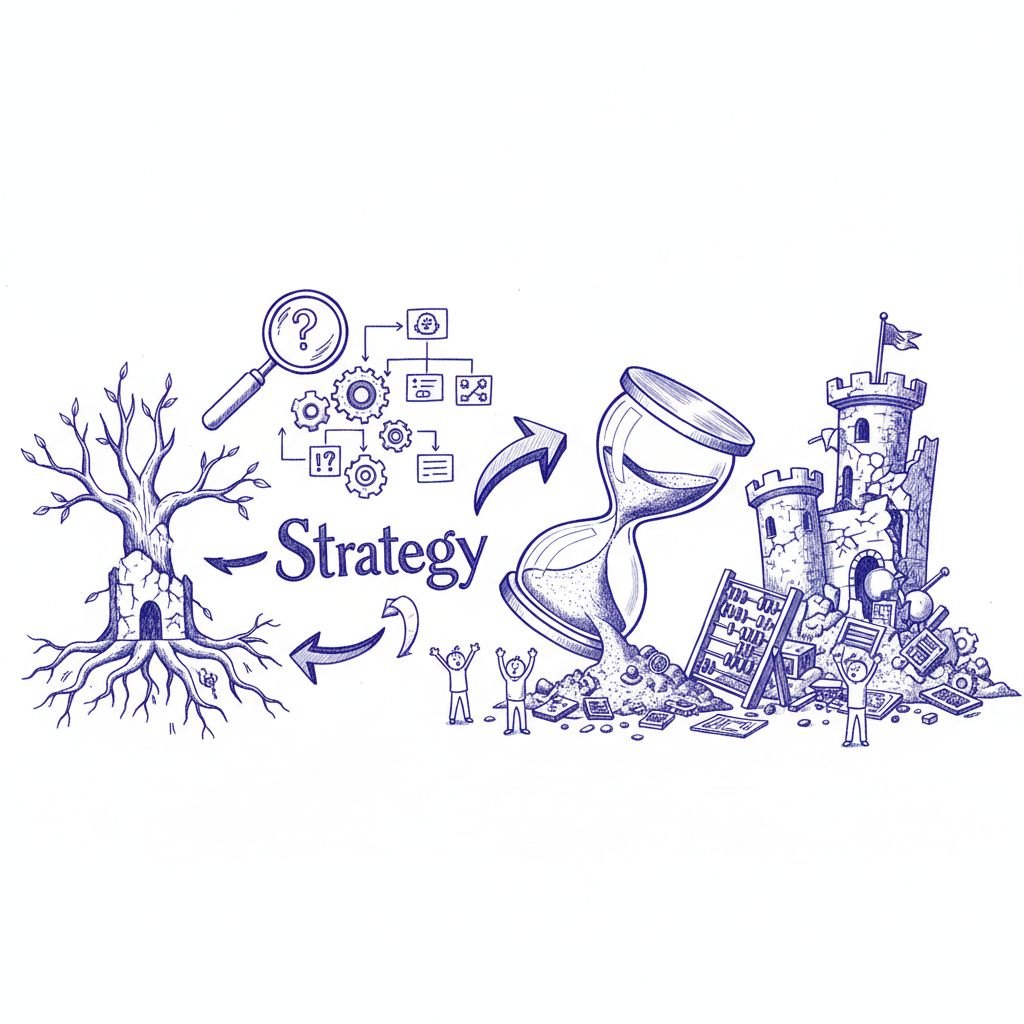
The execution of a cloud migration without a clear strategy incurs hidden costs that exceed 30% of the initial budget. This cost overrun, combined with delays and performance issues, blurs the expected benefits of a more agile and scalable infrastructure, frustrating initial expectations of operational improvement. In the era of digital transformation, the adoption of cloud services is an imperative for organizations seeking competitiveness.
However, the inherent complexity of relocating data and applications demands a meticulously designed cloud strategy to avoid compromising operations. Ignoring critical aspects leads to vulnerabilities in cloud security and underutilization of the capabilities offered by providers. This analysis delves into the most frequent mistakes during the cloud migration planning phase, from the initial assessment of workloads to the configuration of environments.
We will explore practical solutions and robust frameworks that guarantee an efficient and secure transition, maximizing return on investment and laying a solid foundation for the digital future of businesses.
Initial Assessment and Strategy: The Root of Failures
The lack of this detailed analysis leads to erroneous effort and cost estimates, as well as the omission of significant risks that only emerge in advanced stages of the migration. This can cause budget deviations, such as the 25% increase observed in some poorly planned projects.
The solution to this problem lies in a deep and meticulous “as-is” analysis of the current state of the infrastructure. This process must go beyond the surface, identifying each component and its interaction, which is fundamental to a robust cloud strategy.
Likewise, it is essential to build a solid business case that justifies the migration beyond mere technology adoption, focusing on tangible business value. A Microsoft partner like KCP Dynamics is vital for aligning strategy with business objectives.
Establishing clear and measurable key performance indicators (KPIs) is crucial to quantify post-migration success, avoiding surprises and major deviations. These KPIs allow verification of whether the new cloud infrastructure meets performance and efficiency expectations.
In this regard, the Dynamics 365 consulting expertise that KCP Dynamics brings is essential for designing migration plans that integrate solutions such as Microsoft Dynamics 365 (Business Central or Finance & Operations). This ensures that business objectives are reflected in the technology planning.
A well-defined strategy and a precise scope not only mitigate common cloud migration mistakes, but also ensure operational continuity and reduction of technological risks. This is the foundation for true optimization and a successful path to the cloud.
Tired of uncertainty in your migration?
Incomplete scope definition is the root of failures. Get an expert initial assessment to ensure error-free planning and clear objectives.
Technical and Architectural Challenges: The Hidden Complexity
Many organizations begin their cloud migration seduced by the apparent simplicity of a ‘lift and shift’ strategy. This approach involves moving systems and applications as-is from an on-premises environment to cloud infrastructure, promising a quick transition without substantial changes to the existing architecture.
However, this tactic hides a significant trap: the replication of pre-existing operational and architectural inefficiencies. Imagine a manufacturing company in Querétaro, Mexico, that moves its oversized servers without analyzing them. The problems of its on-premises infrastructure simply reappear, now in the cloud, but with a monthly bill.
The hidden costs of cloud migration escalate rapidly due to resource underutilization and the inability to leverage elasticity. A retail chain in Barcelona, Spain, could end up paying for virtual machines that are always on, even during low-demand hours, losing the opportunity to optimize spending and the inherent flexibility of Azure.
Adopting ‘lift and shift’ without an architectural reassessment severely limits access to the native advantages of the cloud. Services such as elastic scalability, inherent resilience, and managed offerings remain out of reach. It is a common mistake that prevents true digital transformation and performance improvement.
An effective cloud strategy demands identifying which workloads are candidates for modernization or refactoring, and which can benefit from rehosting. This distinction is an essential part of the 6 Rs of migration, where ‘Refactoring’ implies adapting the application to fully leverage cloud capabilities, as opposed to simple ‘Rehosting’.
To avoid these pitfalls, Dynamics 365 and Azure consulting that evaluates existing infrastructure and designs an optimized route is crucial. Companies like KCP Dynamics, with their global experience and as a Microsoft partner, guide organizations through complex digital transformation projects, ensuring an efficient and cost-effective migration.
The goal is not just to move systems, but to optimize their performance, improve cloud security, and reduce long-term operational costs. Meticulous planning, going beyond simple relocation, is the key to unlocking the true potential of cloud infrastructure and ensuring operational continuity and business agility.
Optimize Your Cloud Migration: Avoid Hidden Costs
Don’t let ‘lift and shift’ without a strategy limit your potential. Our expert team helps you design an efficient and cost-effective cloud architecture.
Cost and Budget Management: The Unexpected Financial Factor
One of the most recurring mistakes in planning a cloud migration is the drastic underestimation of ongoing operational costs. Attention tends to focus exclusively on the initial investment, overlooking a series of recurring expenses that are essential for optimal operation.
These hidden costs of cloud migration can arise from various unexpected sources. They include data transfer fees (egress fees), the consumption of specialized services, and specific software licenses that must be maintained. For example, intensive use of databases or Artificial Intelligence services in Azure can generate significant costs if not managed proactively.
The absence of a robust discipline such as FinOps (Cloud Financial Operations) is a critical factor that prevents constant optimization. This lack of collaborative governance between finance, operations, and development teams can cause the budget to spike unexpectedly and uncontrollably, affecting project profitability.
A comprehensive solution to mitigate these risks involves creating detailed TCO (Total Cost of Ownership) models from the earliest phases of the cloud strategy. These models must include an exhaustive projection of all future expenses, not just the direct investment in infrastructure, considering the evolution of services and business growth.
The implementation of real-time spending monitoring tools is absolutely fundamental for proactive management. These allow identification of consumption deviations, timely application of adjustments, and avoidance of budget surprises, being a key pillar in any successful digital transformation.
Adopting a FinOps culture requires not only tools, but also experience and a strategic ally. A Microsoft partner like KCP Dynamics, with its specialization in Azure, offers the necessary consulting to optimize cloud infrastructure and ensure long-term cost governance, providing support from the Americas to Asia.
Ignoring the relevance of FinOps can lead to significant cost overruns, affecting profitability and hindering business scalability. This not only negatively impacts the financial balance, but also slows the company’s ability to innovate and effectively adapt to new demands of the global market.
It is essential not only to plan the initial migration investment, but to establish a robust framework for continuous optimization and technical debt management. Integrating FinOps from the early phases of how to plan a cloud migration step by step is a solid guarantee of sustained financial and operational success.
The Financial Achilles’ Heel in the CloudUnderestimating ongoing operational costs is the most critical financial mistake in cloud migration. Adopting a FinOps discipline and using real-time monitoring tools are essential to ensure profitability and avoid unexpected cost overruns, transforming cost management from reactive to proactive.
Security and Regulatory Compliance: Inadvertent Vulnerabilities
Cloud migration introduces a new security paradigm, where misconfiguration of identity and access management (IAM) emerges as one of the most critical failures. Many organizations underestimate the importance of the shared responsibility model, assuming that the cloud provider manages all security.
This fundamental error leads to the creation of excessive permissions or poorly defined roles, exposing critical data to unauthorized access. A common example is leaving storage buckets public or granting administrator privileges to users who only need limited access, creating exploitable security breaches.
The lack of a solid IAM strategy during planning can compromise the entire cloud security posture. Recent data indicates that misconfigurations are one of the leading causes of data breaches, with significant costs associated with their remediation and corporate reputation.
The solution involves a comprehensive IAM review based on the principle of least privilege, ensuring that each user and service has only the strictly necessary permissions. This is crucial for preventing privilege escalation and containing potential cyberattacks.
Additionally, the mandatory implementation of multi-factor authentication (MFA) and the design of granular access policies are unavoidable steps. These measures drastically strengthen protection, even against compromised credentials in cloud infrastructure environments.
Regulatory compliance is another fundamental pillar; ignoring it from the initial stages of a cloud strategy is a serious mistake. Regulations such as GDPR in Europe or HIPAA in the healthcare sector dictate strict guidelines on data protection that must be proactively integrated into the architecture.
To mitigate these risks, regular security audits are indispensable. A Microsoft partner like KCP Dynamics can offer expert consulting on the implementation and optimization of IAM, ensuring reduction of technological risks and adherence to global standards in digital transformation projects.
Adopting a proactive IAM posture is essential for the success of any cloud migration. This not only protects digital assets, but also guarantees operational continuity and customer trust in an increasingly regulated environment.
Principle of Least PrivilegeEnsures that each user and service accesses only the strictly necessary resources.
Multi-Factor Authentication (MFA)Mandatory implementation to protect access even with compromised credentials.
Proactive Regulatory ComplianceIntegrate regulations such as GDPR or HIPAA from the initial phases of the migration.
Change Management and Talent: The Human Dimension of Success
Cloud migration transcends technology; it is a profound digital transformation that directly impacts people. Frequently, the human dimension of this process is underestimated, leading to significant obstacles. Cultural resistance and a deficit in staff training emerge as the most critical challenges, capable of paralyzing even the most meticulous cloud strategy.
Resistance to change arises from the inherent uncertainty of the unknown and the perception that new tools will alter established routines. Employees may feel overwhelmed or concerned about the obsolescence of their skills, which is accentuated if communication about the benefits of cloud infrastructure is insufficient or unclear. This human factor, if not properly managed, can drastically slow adoption.
A training deficit is equally harmful. The absence of robust training programs for new cloud tools and methodologies, such as Azure or the Power Platform, leaves teams without the necessary competencies. This not only generates frustration among staff, but also increases operational errors and inefficiency, compromising the business’s operational continuity.
Investing in continuous training is therefore essential. This includes developing skills in key areas such as cloud computing, DevOps, and cloud security, ensuring that staff are prepared for new environments. Fostering a culture of continuous learning and adaptability is essential to overcome reluctance and build a competent and proactive team.
Effective communication is the pillar for obtaining team acceptance and commitment. It is fundamental to clearly explain the benefits of cloud migration for the company and, above all, for the employees themselves. Highlighting how new tools like Microsoft Dynamics 365 can simplify tasks, open new professional growth opportunities, and improve collaboration is key to generating enthusiasm.
Companies like KCP Dynamics, an experienced Microsoft partner, understand the importance of this human dimension. With more than two decades of leadership in digital transformation projects, they address training and change management as fundamental pillars. Their approach ensures that the technological transition is smooth and the adoption of new operations, successful.
Ignoring cultural resistance and the skills deficit is one of the common cloud migration mistakes that can lead to failed projects. By prioritizing a holistic strategy that integrates talent development and transparent communication, organizations can ensure a successful transition. This not only optimizes technological performance, but also strengthens the company’s human capital.
Strategic TrainingInvest in continuous training for cloud, DevOps, and security skills, preparing the team for new environments.
Culture of AdaptabilityFoster an environment of continuous learning to overcome resistance and build a proactive and competent team.
Transparent CommunicationClearly explain the benefits of the cloud for the company and employees, driving acceptance and commitment.
Post-Migration Operations and Continuous Optimization: Beyond the Launch
One of the common cloud migration mistakes is perceiving it as a destination, rather than a dynamic and continuous process. This static vision ignores the pressing need for active and strategic management that guarantees optimal performance and resource efficiency once the initial transfer is complete.
The absence of a robust monitoring and continuous optimization strategy can quickly erode the expected benefits of cloud migration. Without planning for daily post-launch operations, organizations face performance issues, reactive incident management, and the emergence of hidden costs of cloud migration that negate the initial advantages.
The solution to this challenge lies in the implementation of a comprehensive observability strategy. This involves establishing and configuring advanced tools for the collection and analysis of logs, metrics, and traces. These data sources are crucial for understanding the behavior of cloud infrastructure and applications, enabling proactive detection of anomalies and bottlenecks.
Additionally, the automation of operational processes through infrastructure as code (IaC) becomes indispensable. Tools such as Azure Resource Manager or Terraform allow resources to be deployed, configured, and managed programmatically and consistently, simplifying incident resolution and ensuring scalability with minimal manual intervention.
A solid framework for continuous improvement is the pillar of long-term optimization. This includes periodic reassessment of instance types, optimization of storage configurations, and cleanup of unused resources. This practice is fundamental for adjusting architecture and resources, thereby maximizing efficiency and containing operational costs.
Adopting a mindset of constant optimization ensures that the cloud investment continues to deliver value and fosters lasting digital transformation. Companies like KCP Dynamics, with their global experience in digital transformation projects, understand the importance of this uninterrupted evolution, guiding their clients beyond the simple launch.
With two decades leading the implementation and optimization of robust solutions in Azure and Power Platform, KCP Dynamics positions itself as a strategic ally. Its focus on the integration of advanced tools and expert consulting facilitates data-driven decision-making and guarantees the operational continuity of its clients in complex environments.
Ultimately, cloud migration is the starting point of a constant evolution. Only through a cloud strategy dedicated to proactive monitoring and relentless optimization can companies fully reap the fruits of their investment, ensuring sustainable performance, efficiency, and agility over time.
Observability StrategyImplement advanced tools for the collection and analysis of logs, metrics, and traces, enabling proactive detection of anomalies.
Automation with IaCUse Infrastructure as Code (IaC) to deploy and manage resources programmatically, consistently, and scalably, minimizing manual intervention.
Continuous Improvement FrameworkEstablish a cycle of periodic reassessment of resources, configurations, and costs to optimize architecture and ensure long-term efficiency.
Conclusions and Final Recommendations
A successful cloud migration is the result of meticulous planning that addresses every phase, from the initial strategic definition to continuous optimization. Mastering common mistakes is not just a preventive measure, but an imperative to ensure that cloud infrastructure becomes a true engine of growth and digital transformation.
Key Points to Remember
- Clear cloud strategy: A well-defined vision aligns technology with business objectives, laying the groundwork for the success of the entire initiative.
- Robust architecture: Technical complexity demands detailed design and selection of solutions that guarantee performance, security, and scalability.
- Proactive cost management: Constant control and optimization of cloud resources avoid budget surprises and maximize return on investment.
- Integrated security: Cloud security and regulatory compliance must be pillars from the initial design, not afterthoughts.
- Culture of change and training: Investing in human talent and managing the cultural transition is vital for the effective adoption of new tools and processes.
- Continuous optimization: Post-migration technological evolution is crucial for maintaining agility, innovating, and fully leveraging cloud capabilities.
Practical Recommendations
To approach cloud migration with confidence, organizations must adopt a holistic approach. This involves a comprehensive assessment of their current landscape, a clear definition of their objectives, and the construction of a detailed roadmap that contemplates the preparation, migration, and optimization phases. It is essential to anticipate technical challenges, establish rigorous financial controls, and design a cloud security strategy that complies with global and local regulations.
Considering collaboration with a strategic partner is a key investment. An expert can offer the vision and experience necessary to navigate the complexity of cloud infrastructure, from the implementation of robust solutions such as Microsoft platforms (Azure, Dynamics 365, Power Platform) to the integration of Artificial Intelligence and data analytics tools. An ally with global reach and deep knowledge of the legal and fiscal particularities of each market ensures a seamless digital transformation, guaranteeing agility and compliance.
The cloud strategy does not end with the launch; it requires a constant commitment to improvement. Maintain a mindset of continuous optimization, monitoring performance, adjusting resources, and exploring new functionalities. Agility and the ability to adapt are essential to capitalize on the advantages of the cloud and maintain competitiveness in a constantly evolving business environment.
Approaching cloud migration with foresight and adequate support turns every challenge into an opportunity for innovation and operational efficiency. By collaborating with experts, organizations can ensure a successful and sustainable digital transformation over time.
Clear Cloud StrategyA well-defined vision that aligns technology with business objectives.
Robust ArchitectureDetailed design and selection of solutions to guarantee performance, security, and scalability.
Proactive Cost ManagementConstant control and optimization of resources to avoid budget surprises and maximize ROI.
Integrated SecurityCloud security and regulatory compliance must be pillars from the initial design.
Culture of Change and TrainingInvestment in human talent and management of the cultural transition for the effective adoption of new tools.
Continuous OptimizationPost-migration technological evolution is crucial for maintaining agility and innovating.